Sewage Cleanup in Kennesaw, GA

Sewage in your house is not a plumbing problem. It is a health problem. Sewage cleanup in Kennesaw, GA, done with full biohazard precautions: containment, extraction, removal of everything porous that touched it, and sanitization of what remains. Do not mop it. Do not fan it. Call us.

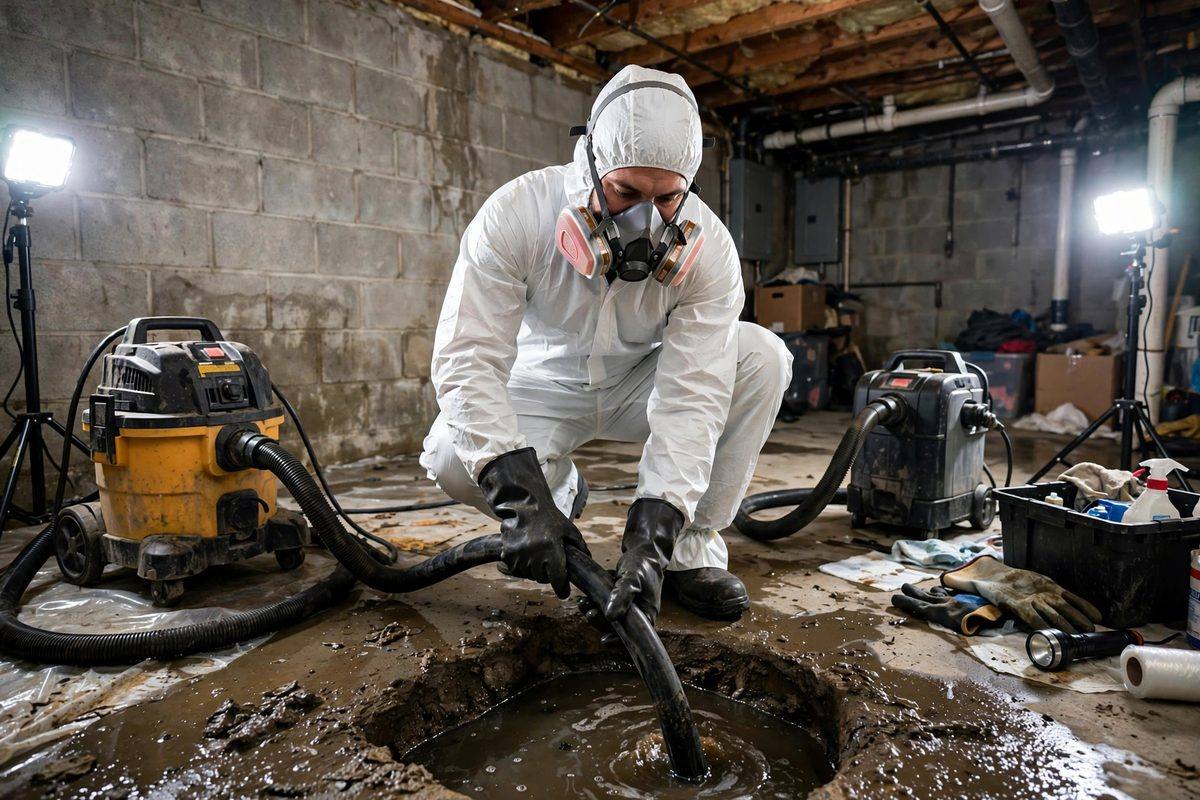
Technician in protective gear during sewage cleanup

Category 3 water is a health hazard, not a mess.

Restoration classifies sewage as Category 3: black water. It carries bacteria, viruses, parasites, and fungi. Contact can cause serious illness. This classification changes everything about how the job gets done.

Children, elderly, and immunocompromised people should not be in the home during active sewage remediation. We will tell you this directly, and we will tell you when it is safe to return.

This is the job where cutting corners has medical consequences. We do not cut corners.

What DIY gets wrong

Mopping spreads contamination across clean surfaces. Household fans aerosolize pathogens into the air your family breathes. Bleach on a floor does not reach what soaked into the subfloor, the wall cavities, and the HVAC-adjacent spaces. Every DIY sewage cleanup we have seen made the contamination footprint bigger.

What proper protection looks like

Full personal protective equipment on every technician. Containment barriers sealing the work area. Negative air pressure so nothing migrates. Extraction with dedicated equipment that never touches a clean-water job. Removal of all porous materials that contacted sewage: carpet, pad, drywall, insulation. They cannot be sanitized reliably, so they come out. Then sanitization of everything that remains, verified before containment comes down.
The sewage cleanup, step by step.

Every step is photographed and logged. Your insurance file gets the full record.

1

Isolate.

Containment barriers go up before anything else. The affected area is sealed from the rest of the house. HVAC vents in the zone get sealed. Nothing leaves the containment without being bagged.

2

Extract.

Dedicated extraction equipment removes standing sewage. This equipment is segregated from our clean-water gear: cross-contamination between jobs is a non-starter.

3

Remove porous materials.

Carpet, pad, drywall below the contamination line, insulation, and any upholstered items that contacted sewage. These cannot be reliably sanitized. They are bagged, sealed, and disposed of per local regulations.

4

Clean and sanitize.

All remaining hard surfaces get HEPA vacuuming followed by hospital-grade antimicrobial treatment. Wall cavities, subfloor, and framing get treated after contaminated materials are out.

5

Dry to verification.

Dehumidification and air movement under containment, with moisture readings confirming dry before sanitization is considered complete. Damp and sanitized is not sanitized.

6

Clearance and rebuild.

Visual clearance, odor check, and moisture verification. Then rebuild: drywall, flooring, paint. Your home comes back clean, documented, and safe.

Sewage cleanup in Kennesaw, GA: why backups happen here.

Root intrusion into sewer laterals. Kennesaw's mature tree canopy is beautiful and destructive. Roots seek the moisture in sewer lines, infiltrate joints, and grow into blockages. The 1980s–2000s subdivisions with mature oaks and pines are the highest-risk zones. This is the number one sewage cause we see, and it is preventable with periodic lateral inspection.

Heavy-rain overload. 54.6 inches of annual rain, concentrated in spring storms and summer downpours, can overwhelm combined or aging sewer infrastructure. When the municipal system surges, the lowest drain in your house becomes the relief valve. Basement floor drains and lower-level bathrooms flood first.

Aging lines in established neighborhoods. Clay and cast-iron sewer lines in older Kennesaw neighborhoods corrode, scale, and collapse over decades. A line that has carried waste for 40 years does not fail gracefully.

Sewage cleanup questions, answered.

Q: Is sewage backup covered by homeowner's insurance?

A: Standard policies usually exclude it. Many insurers offer a sewer backup rider for a small premium, and in Kennesaw we recommend it to every homeowner. Check your policy now, before you need it. If you have the rider, we document to claim standards.

Q: How long until my home is safe again?

A: Active remediation: 3–7 days depending on extent. You can return when we verify clearance: visually clean, odor-free, and moisture-verified. We do not rush clearance on biohazard jobs.

Q: Can anything be saved after sewage exposure?

A: Hard, non-porous items: usually yes, after proper sanitization. Porous materials (carpet, pad, drywall, insulation, upholstered furniture): no. We assess item by item and tell you straight.

Q: What should I do right now, before you arrive?

A: Keep everyone away from the affected area. Do not run HVAC if the contamination is near vents. Do not flush or run water if the backup is active. If you know where your main water shutoff is, turn it off. Then call us.

Q: Will it smell after cleanup?

A: No. Proper Category 3 cleanup eliminates the odor source completely. Lingering sewage odor means the job was incomplete. Our clearance includes an odor check.

Request an Assessment

Tell us what happened. We will call back shortly to schedule a look.

Active emergency? Call (770) 275-6244 now instead of waiting on the form.

Related Services

One crew handles the full chain. If your job touches more than one of these, we scope it together.

Not sure which service you need? Call (770) 275-6244 and describe what you see. We will point you to the right page, even if the answer is "you do not need us."

Where We Work

Dispatched from Kennesaw across the northwest Atlanta metro.

See all service areas

Call (770) 275-6244